
How to Store Peptides: Refrigeration, Freezing, and Real Shelf Life Explained | Peptadex
Educational content. Not medical advice. Consult a qualified healthcare professional before acting on any information in this article. Full disclaimer.
Why Peptide Storage Matters More Than Most People Think
Peptides are physically and chemically fragile. They degrade through hydrolysis, oxidation, aggregation, and microbial contamination — all of which are temperature- and time-dependent. A peptide that is fully potent on the day of reconstitution may be substantially degraded weeks later if stored incorrectly. Storage practice affects the dose you actually receive, even if the label and the syringe say the same thing.
Key Takeaways
- Lyophilized (freeze-dried) peptide is far more stable than reconstituted peptide
- Reconstituted peptides should be refrigerated and used within 14–28 days for most compounds
- Bacteriostatic water (with 0.9% benzyl alcohol) extends usable life beyond sterile water
- Freeze-thaw cycles damage peptides — never freeze and re-thaw a reconstituted vial
- Light, oxygen, and pH all contribute to degradation; opaque storage is preferred
Lyophilized Peptide Storage
Lyophilized peptide — the dry powder in the vial as shipped — is the most stable form. Properly stored lyophilized peptide can remain potent for years.
Recommended Conditions
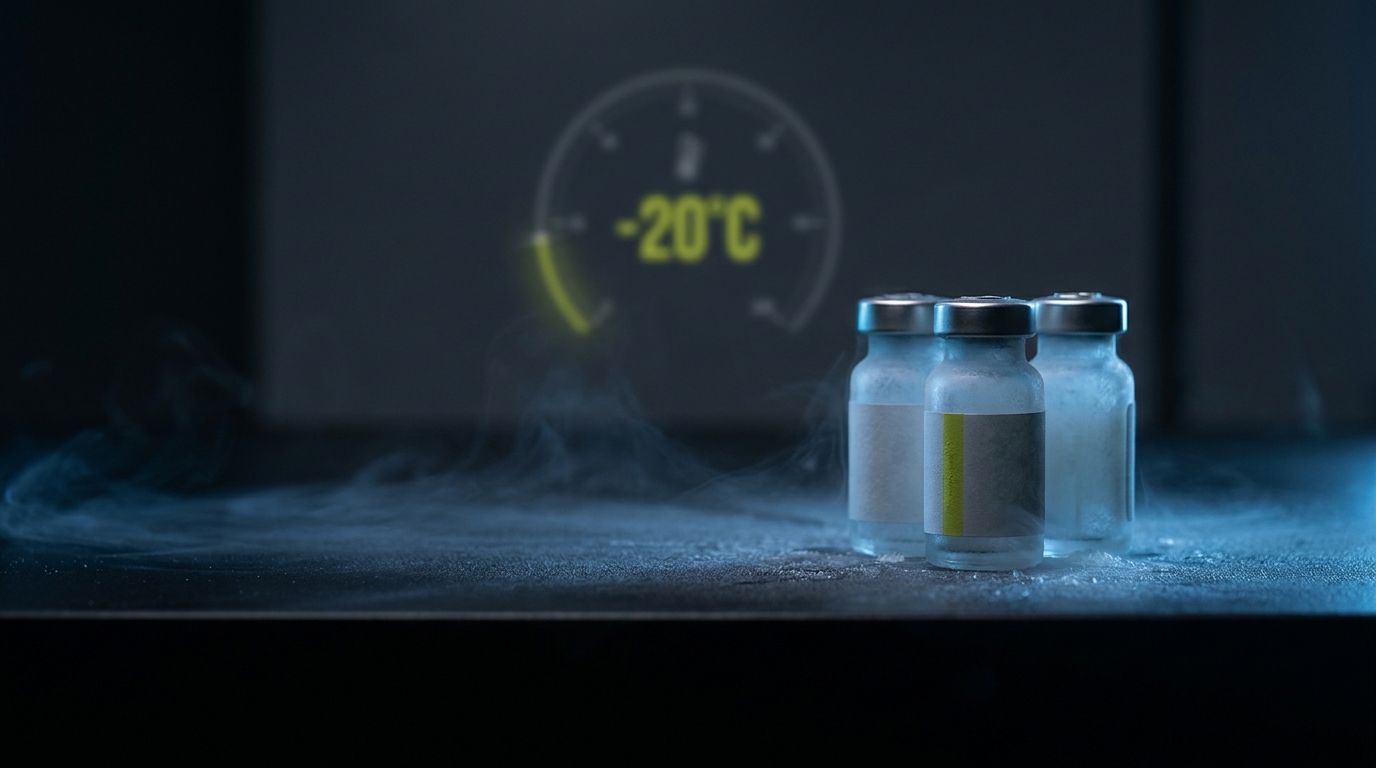
- Long-term (over 3 months): Freezer at -20°C or colder. Stable for 1–3+ years for most peptides.
- Short-term (under 3 months): Refrigerator at 2–8°C. Stable for months.
- Room temperature: Acceptable for short periods (during shipping, days to a few weeks). Not recommended as long-term storage.
Critical Detail: Bring to Room Temperature Before Opening
Cold vials brought directly into warm humid air will cause condensation inside the vial when opened. Water introduction begins hydrolysis. Always allow lyophilized peptide vials to equilibrate to room temperature (15–30 minutes) before breaking the seal.
Reconstituted Peptide Storage
Once a peptide is dissolved in liquid (reconstituted), the stability clock accelerates dramatically. The peptide is now exposed to water (hydrolysis), to whatever else is in the diluent (oxidants, buffers), and potentially to microbial growth.
Recommended Conditions
- Refrigerator (2–8°C): The standard for reconstituted peptides. Most compounds stable for 2–4 weeks.
- Freezer: Generally not recommended for reconstituted vials in normal use. Freeze-thaw damages the peptide structure.
- Room temperature: Acceptable for hours to a few days during active use, but not as routine storage.
The Freeze-Thaw Problem
When a reconstituted peptide solution freezes, ice crystal formation creates mechanical stress on peptide structure. Repeated freeze-thaw cycles cause progressive aggregation and denaturation. The rule: once reconstituted, keep refrigerated. If you must store reconstituted peptide for extended periods, aliquot into single-use volumes before freezing so each aliquot is thawed only once.
Bacteriostatic Water vs Sterile Water
The diluent matters. The two common choices for peptide reconstitution:
Bacteriostatic Water for Injection (BAC water)
Sterile water with 0.9% benzyl alcohol added as a bacteriostatic preservative. The benzyl alcohol prevents microbial growth, allowing multi-dose vial use over 2–4 weeks of refrigerated storage. This is the standard for multi-use peptide reconstitution.
Sterile Water for Injection (SWFI)
No preservative. Strictly single-use because microbial growth is uncontrolled once the seal is broken. SWFI is appropriate when using the entire vial in a single dose or when the patient cannot tolerate benzyl alcohol (rare).
Practical Implication
For multi-dose research protocols, BAC water is the appropriate choice. For pediatric or benzyl-alcohol-sensitive contexts, SWFI is required. Some peptides have specific recommended diluents — semaglutide and tirzepatide use proprietary diluents in their marketed formulations.
Compound-Specific Stability Notes
GLP-1 Receptor Agonists
Marketed semaglutide and tirzepatide pens are stable for 56 days at refrigerated temperatures after first use, per FDA labeling. Compounded GLP-1 vials follow USP 797 stability assignments — typically 14–28 days refrigerated. Do not freeze.
BPC-157
Reconstituted BPC-157 is generally considered stable for 4–6 weeks refrigerated when prepared with BAC water. Lyophilized BPC-157 is stable for years at -20°C. See BPC-157 dosage guide for protocol context.
Growth Hormone Secretagogues
Ipamorelin, CJC-1295, and similar peptides are stable for 2–4 weeks refrigerated when reconstituted. CJC-1295 with DAC has greater intrinsic stability due to the DAC modification.
Epitalon
Tetrapeptide with relatively short reconstituted shelf life — 2–3 weeks refrigerated is typical. The short courses used in research protocols mean a single vial often spans the entire course.
Light and Oxygen Exposure
Many peptides degrade faster when exposed to light, particularly ultraviolet wavelengths. Tryptophan, methionine, and cysteine residues are particularly susceptible to oxidative damage. Practical protections:
- Store vials in their original carton or in a dark container
- Minimize time vials spend out of refrigeration during reconstitution and dose drawing
- Avoid storing near windows or under direct light
Signs of Peptide Degradation
Visible indicators that a reconstituted peptide may be degraded:
- Cloudiness or precipitation: Aggregation; do not use
- Color change: Most peptides should be clear and colorless when reconstituted; yellowing or browning indicates oxidation
- Particulate matter: Suggests microbial contamination or aggregation
- Unusual odor: Indicates contamination or degradation
Visual inspection cannot detect partial degradation that has reduced potency without obvious physical changes. The conservative approach is to discard reconstituted vials at the end of their assigned shelf life regardless of appearance.
Travel and Transport
For peptide users who travel, the constraint is maintaining refrigeration. Insulated medication cases with reusable cold packs maintain refrigerated temperatures for 12–24 hours. For longer travel, dry shippers (vapor-shipper LN2) or active cooling devices are options. Avoid checked baggage where temperature control is not assured. TSA permits insulin-style medication cooling kits; declare and present them at security screening.
Shelf Life of Marketed Products
Approved injectable peptide products have manufacturer-defined storage and use-by dates that take precedence over generic guidelines:
- Wegovy (semaglutide): refrigerate; can be left at room temperature up to 28 days; 56-day in-use period after first injection
- Mounjaro/Zepbound (tirzepatide): similar storage profile to Wegovy
- Foundayo (orforglipron): oral tablet; standard ambient storage per pharmacy dispensing
Bottom Line
Lyophilized peptides are stable for years when frozen. Reconstituted peptides are stable for 2–4 weeks refrigerated when prepared correctly with BAC water. Avoid freeze-thaw cycles, protect from light, and observe visual integrity. The single largest preventable error in peptide protocols is treating reconstituted peptides as if they have the stability of the lyophilized form — they do not.
For reconstitution technique itself, see the peptide reconstitution guide. For injection technique by route, see peptide injection sites compared.
Disclaimer: This article describes general peptide storage principles based on published literature. It is not medical advice. Always follow manufacturer or compounding pharmacy storage instructions for specific products. Many peptides discussed are not FDA-approved for human use.
Disclaimer: The information provided on Peptadex is for educational and informational purposes only. It is not intended as medical advice, diagnosis, or treatment. Always consult a qualified healthcare professional before making any health-related decisions.
Track Your Peptide Protocols
Log doses, track cycles, and monitor your research with Protocol.
Join WaitlistAdvertisement